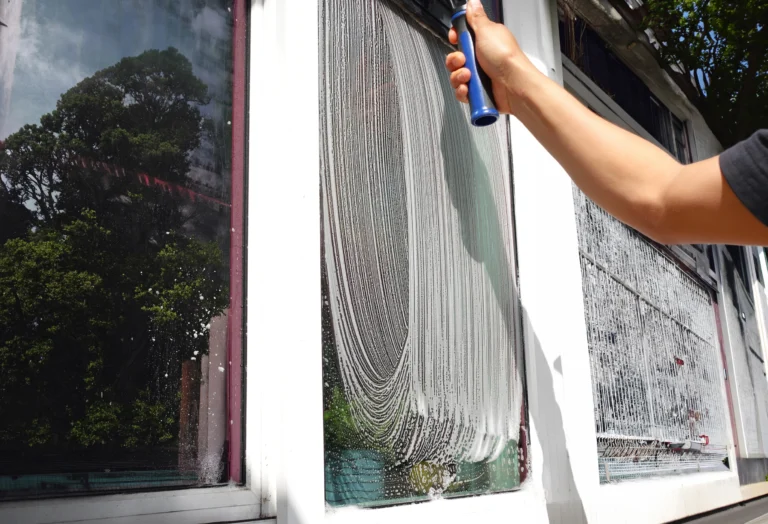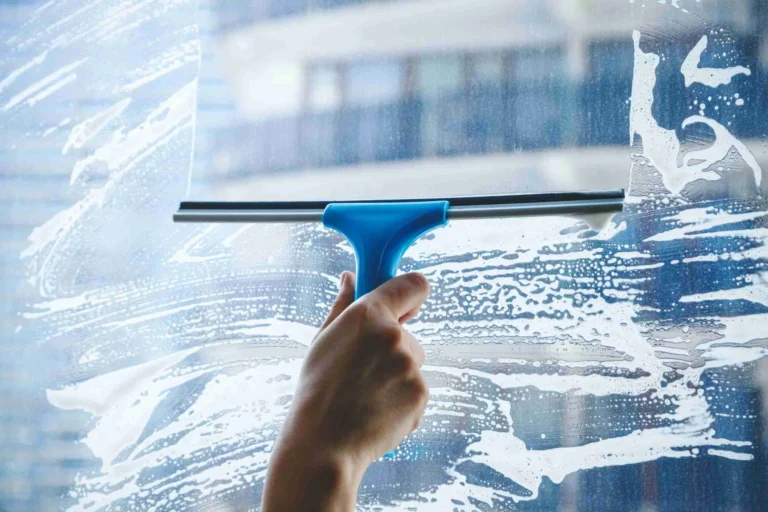
To remove hard water stains from windows, spray the glass with white vinegar (or a 50/50 vinegar-water mix), let it sit for 5–10 minutes, then scrub with a non-scratch pad and squeegee dry. That handles light, fresh mineral deposits. But in Florida — where sprinklers and hard water hit glass daily across Oldsmar, Palm Harbor, and Clearwater — stains often bake in and etch the glass, and no amount of vinegar will touch those. Here’s how to tell the difference and fix each one.
What Are Hard Water Stains, Exactly?
Hard water is water with a high mineral content — mostly calcium and magnesium. When it dries on your windows, the water evaporates but the minerals stay behind, leaving a chalky white film or cloudy spots. That’s a hard water stain.
Around Pinellas County, the usual culprit is sprinkler systems. Irrigation heads spray mineral-heavy water onto lower windows every time they run, and each cycle leaves another thin layer of deposit. Rain, humidity, and Gulf salt add to the buildup. Over months, what started as a faint haze turns into a stubborn crust that regular cleaning slides right over.
The key thing to understand: a hard water stain is a mineral deposit sitting on the glass. If you catch it early, it comes off. If you let it sit, it can chemically bond to the surface — and that’s a different, harder problem.
Step-by-Step: Removing Light Hard Water Stains Yourself
For recent, surface-level deposits, this DIY method works on most windows.
- Rinse the glass with plain water to clear loose dirt and pollen first.
- Apply white vinegar. Spray it directly, or soak a cloth and press it flat against the stain. Vinegar is a mild acid that dissolves calcium and magnesium deposits.
- Let it dwell 5–10 minutes. Don’t let it dry out — re-spray if it does. For tougher spots, warm the vinegar slightly first.
- Scrub gently with a non-abrasive pad or microfiber cloth in circular motions. Never use steel wool or anything that can scratch glass.
- Rinse and squeegee dry. Squeegeeing (rather than air-drying) prevents new water spots from forming as it dries.
[INTERNAL LINK: link to the exterior window cleaning service page]
If the film lifts and the glass comes clear, you caught it in time. If it barely fades, you’re likely dealing with etching — read on.
When Vinegar Won’t Work: Etched Glass
Here’s the part most DIY guides skip. When hard water sits on glass for a long time — especially the silica-heavy deposits common in Florida — the minerals can actually bond with and etch the glass surface. At that point you’re not looking at a film on top of the glass; the glass itself is pitted and clouded.
Etched glass has telltale signs: the cloudiness doesn’t improve with vinegar, it looks the same wet or dry, and you can sometimes feel roughness when you run a fingernail across it. Common vinegar-and-scrub methods won’t fix this, and aggressive scrubbing risks scratching the glass further.
Removing true etching takes professional-grade restoration — fine cerium oxide polishing compounds and specialized pads applied with the right technique and pressure. Done wrong, it leaves swirl marks or distorts the glass. This is exactly the point where a professional hard water stain removal treatment earns its cost, because a botched DIY job can mean replacing the pane.
[INTERNAL LINK: link to the hard water stain removal service page]
How to Stop Hard Water Stains From Coming Back
Removing the stain is only half the job. In Florida, prevention is what actually keeps your windows clear.
- Aim your sprinklers away from the glass. This is the single biggest fix. Adjust or shield any irrigation head that’s hitting a window. It’s free and it solves the root cause for most homes.
- Squeegee after rain or washing. Letting water air-dry on the glass is how deposits form in the first place.
- Clean on a regular schedule. Deposits that never get a chance to build up never bond to the glass. Quarterly cleaning keeps Tampa Bay windows ahead of the problem.
- Consider a protective coating. A glass sealant makes the surface more water-repellent, so minerals rinse off instead of sticking.
[INTERNAL LINK: link to the recurring / maintenance plan page]
The homes that never fight hard water stains aren’t lucky — they’re just staying ahead of the buildup instead of chasing it after the fact.
Why This Is Worse in Tampa Bay
Two things stack the deck against Pinellas County windows. First, hard water: local irrigation water carries plenty of the minerals that cause deposits, and nearly every home runs sprinklers. Second, salt: homes in Clearwater, on the barrier islands, and along the Intracoastal get constant Gulf salt spray that layers in with the mineral buildup and accelerates etching.
That combination is why generic online advice often falls short here. A quick vinegar wipe that works fine in a dry inland state may barely dent months of layered mineral and salt deposits on a coastal Florida window. Staying on top of it — and calling in a pro before deposits etch — is what keeps glass clear long-term.
Frequently Asked Questions
For light, fresh deposits, spray white vinegar or a 50/50 vinegar-water mix on the glass, let it sit 5–10 minutes, scrub with a non-scratch pad, then rinse and squeegee dry. Vinegar dissolves the calcium and magnesium minerals. If the cloudiness doesn’t lift, the glass may be etched, which needs professional restoration.
Yes, for surface-level mineral deposits. Vinegar is a mild acid that breaks down the calcium and magnesium that make up hard water stains. It works best on recent buildup. It won’t fix etched glass, where minerals have chemically bonded to the surface over months — that requires professional polishing compounds.
They can. If mineral deposits sit on glass long enough, they can etch and pit the surface permanently, especially with the silica-heavy water and salt exposure common in Florida. Once glass is etched, cleaning won’t restore it — it needs professional restoration or, in severe cases, replacement. Removing stains early prevents this.
Usually sprinklers. Irrigation systems spray mineral-heavy water onto lower windows every cycle, leaving deposits that build up quickly. Add Florida humidity, frequent rain, and Gulf salt near the coast, and glass in areas like Oldsmar, Palm Harbor, and Clearwater accumulates stains far faster than in drier climates.
Get Your Glass Truly Clear Again
If vinegar and elbow grease aren’t cutting through the haze, the stains have likely etched in — and that’s a job for the right tools, not more scrubbing. Sleek Window Cleaning is fully insured, 4.9-star rated, and local to Pinellas County, so the crew knows exactly what Florida sprinklers and Gulf salt do to glass and how to safely restore it. We remove the stains DIY can’t touch, then help you keep them from coming back.
Serving Oldsmar, Palm Harbor, Clearwater, St. Pete, and the greater Tampa Bay area.
- Call us: (727) 269-9002
- Visit us: 126 Woodlake Wynde, Oldsmar, FL 34677
- Hours: Monday–Saturday, 7:00 AM–6:00 PM
Get your free quote at sleekcleans.com.