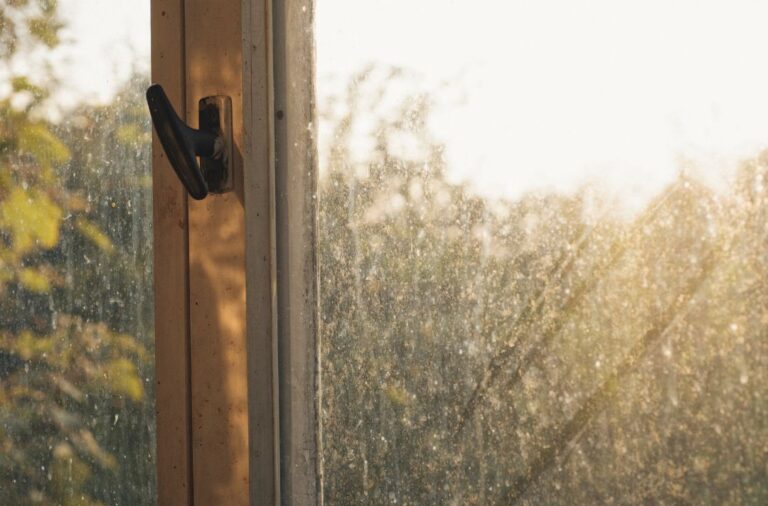
If you’ve ever cleaned your windows perfectly clear, only to look up a week later and see cloudy, chalky white spots where the rain hit — you’ve already met Tampa Bay’s most persistent window problem.
Hard water stains are not dirt. They’re not streaks from a bad cleaning. They’re mineral deposits — and in Tampa, Clearwater, and St. Petersburg specifically, they show up on windows faster and stick harder than almost anywhere else in the country. We see them on roughly 8 out of 10 first-time service calls, often on windows that were professionally cleaned just months ago.
This guide covers what hard water stains actually are, why Tampa Bay homes get them worse than most, the DIY removal methods that genuinely work (and the ones that waste your afternoon), what to expect when you bring in a pro, and — most importantly — how to keep them from coming back.
What Hard Water Stains Actually Are
Hard water is water that contains dissolved minerals — primarily calcium and magnesium, with smaller amounts of iron, silica, and limestone. When that water lands on glass and evaporates, the water disappears, but the minerals don’t. They stay behind, bonded to the glass surface, and over time they harden into a chalky, sometimes rainbow-tinted residue.
The chemistry matters here because it tells you why regular window cleaner doesn’t fix them. Soap and a squeegee remove dirt sitting on the glass. Hard water stains aren’t sitting on the glass — they’re chemically bonded to it. You need something that dissolves the minerals (an acid) or mechanically removes them (a fine abrasive), and you need to apply it correctly or you’ll either fail to lift the deposit or scratch the glass trying.
The longer hard water stains sit, the deeper they bond. A 3-week-old stain wipes off easily. A 3-year-old stain may require professional restoration — and in rare cases, the glass itself becomes etched and the damage is permanent.
Why Tampa Bay Homes Get Hard Water Stains Worse Than Most
Three things conspire against Tampa Bay homeowners:
1. Florida groundwater is naturally hard. According to the U.S. Geological Survey, Florida’s groundwater consistently ranks among the hardest in the country — typically 180–250 mg/L of dissolved minerals, well above the 120 mg/L “hard” threshold. Tampa Bay sits on a limestone aquifer, and limestone is essentially fossilized calcium carbonate. Every time well water or municipal water from that source hits glass and dries, it leaves a calcium-rich deposit.
2. Sprinkler systems are everywhere, and they spray windows. This is the single most common cause of hard water stains we see on Tampa Bay homes. Most sprinkler heads aren’t perfectly calibrated, and many spray ground-floor and even second-floor windows during their morning cycle. The water from those sprinklers comes straight from the well or municipal supply — full minerals, no filtration — and dries on the glass in the morning sun before anyone notices.
3. Coastal humidity and salt air accelerate the problem near the water. Homes within a few miles of the Gulf in Clearwater Beach, St. Pete Beach, Indian Rocks, and along Tampa Bay itself deal with airborne salt that compounds the mineral residue. (We see this most often on our Clearwater exterior window cleaning and St. Petersburg exterior cleaning jobs — coastal customers need 50% more frequent service than inland ones.) Salt is hygroscopic — it pulls moisture out of the air, which keeps the deposit chemically active for longer and bonds it more tightly to the glass.
We’ve cleaned homes 200 yards from the Gulf where the seaward-facing windows develop visible spotting within 6 weeks of a professional cleaning. Inland in Brandon or Riverview, the same windows might stay clear for 4–6 months.
How to Tell Hard Water Stains Apart from Other Problems
Before you start scrubbing, identify what you’re actually dealing with. The treatment is different.
Hard water stains look like cloudy white or chalky spots, sometimes with concentric rings (from droplet evaporation). They don’t smudge when you wipe them. Run your fingernail across — you can usually feel a slight raised texture.
Soap residue looks like streaks or filmy haze across the whole window, not spots. It rinses away with plain warm water.
Pollen and dust haze is yellow-tinted or brownish, evenly distributed, and removes with a basic glass cleaner.
Glass etching is the worst case. It looks similar to a hard water stain — cloudy, dull — but it’s permanent. The minerals have actually pitted and eaten into the glass surface. You can’t feel raised texture; the glass is rougher to the touch. If you can’t remove a stain after one professional restoration attempt, it’s likely etched.
The earlier you catch a hard water deposit, the more likely it’s still just a surface stain that can be removed. Catch them within 90 days and you have many options. Wait 2+ years and the only fix may be glass replacement.
DIY Methods That Actually Work (and the Ones That Don’t)
Let’s separate the methods that work from the internet folklore that doesn’t.
What works (for light to moderate stains, <6 months old)
1. White vinegar, undiluted. Spray pure white vinegar on the affected area. Let it sit for 5–10 minutes. The acetic acid dissolves the calcium. Wipe with a microfiber cloth in tight circles. Rinse with clean water and squeegee dry immediately so you don’t replace one mineral deposit with another.
2. 50/50 vinegar and water for prevention/maintenance. Once stains are gone, monthly maintenance with diluted vinegar prevents rebuild. We recommend this to homeowners who don’t want to commit to a recurring service.
3. Commercial mineral cleaners. CLR and Bring It On work well on moderate hard water stains. Read the label — they’re acid-based and can damage screens, paint, and landscaping if you’re not careful. Apply with a soft cloth, never spray near plants, and rinse thoroughly.
4. Bar Keepers Friend. The cleaning product, not the dish soap. It contains oxalic acid plus a very fine abrasive. Wet the glass, sprinkle a small amount on a damp cloth, scrub gently in circles, rinse, squeegee. This is one of the most effective DIY options we’ve seen — but only if you scrub gently. Aggressive scrubbing micro-scratches the glass.
What doesn’t work (or makes it worse)
Toothpaste. Anecdotal social media advice. The mild abrasive in toothpaste isn’t formulated for glass. You’ll spend 30 minutes scrubbing one window and the stains will still be there.
Baking soda paste alone. Baking soda is mildly basic. Hard water stains are mineral deposits that need an acid (or an abrasive) to remove. Baking soda is the wrong chemistry.
WD-40. This will leave an oily film on the glass that attracts more dust and is harder to remove than the original stain.
Razor blades on dry glass. This will scratch the glass permanently. Professional cleaners use razor blades only on wet, soaped surfaces, at a specific angle, and only on flat glass — never on tempered or coated glass where it can cause “razor blade rainbows” (permanent micro-damage).
Steel wool. Even fine steel wool is too abrasive for window glass. You’ll scratch it.
When DIY Isn’t Enough — What Professional Restoration Actually Does
Hard water stains older than 6 months, deeply set in, or covering most of a window’s surface area usually need a professional approach. Three things separate professional restoration from DIY:
Stronger acids, applied with control. We use professional-grade calcium dissolvers — typically a buffered hydrofluoric or phosphoric acid blend — that work in seconds rather than minutes. These chemicals are dangerous in untrained hands (they can etch glass if left on too long, burn skin, and damage surrounding surfaces). Used correctly, they remove deposits DIY products can’t touch.
Mechanical polishing. For deeper deposits, we use cerium oxide — a fine polishing compound used in optics manufacturing — applied with a low-speed rotary polisher. This actually polishes the top molecular layer of the glass, removing the mineral bond and any micro-etching that started underneath.
Treatment + sealing. Our restoration service finishes with a hydrophobic glass sealant (think Rain-X but commercial-grade). The sealant fills micro-pores in the glass surface, making it dramatically harder for new minerals to bond. Treated windows stay clear roughly 3× longer than untreated glass.
A typical restoration on a single window in our Tampa Bay service area takes 15–30 minutes per pane. A whole-home restoration on a 25-window home takes 4–6 hours. The same techniques apply to interior window cleaning when stains have built up on the inside from condensation or interior humidity, though interior staining is much rarer.
How Much Does Professional Hard Water Stain Removal Cost in Tampa Bay?
Pricing varies based on age and severity of the stain, but here are real ranges from our Tampa Bay service area as of May 2026:
- Light staining, full home (15–25 windows): $250–$450 add-on to a standard cleaning
- Moderate staining, full home: $450–$800
- Severe / multi-year buildup, full home: $800–$1,500
- Single-window restoration (one stubborn window): $75–$150
- Restoration + hydrophobic sealant (recommended): add ~$100–$200
These are typical ranges; specific quotes depend on access (multi-story = more), screen condition, and how long the stains have been there. If a company quotes you a flat $99 to “remove all hard water stains” on a typical home, walk away — they’re either using a cleaner that won’t actually work, or they’re going to upsell aggressively once they arrive.
Get a free Tampa Bay hard water stain assessment from Sleek Window Cleaning →
The Real Fix: Preventing Hard Water Stains Before They Happen
Removing hard water stains is fixing the symptom. The real fix is preventing them. Three steps work, in order of impact:
1. Adjust your sprinkler heads (the #1 cause). Walk your property during a sprinkler cycle and watch where the spray hits. Any sprinkler head spraying windows needs to be redirected — most heads can be adjusted by hand, and the rest by a small screwdriver. This single adjustment eliminates 60–70% of the hard water staining we see on Tampa Bay homes.
2. Schedule professional cleaning every 3–4 months. Tampa Bay’s combination of mineral-rich water, humidity, pollen, and salt air means windows that look spotless in February will show staining by May without intervention. Quarterly cleaning catches deposits before they bond — a 3-month-old deposit comes off in seconds; a 12-month-old deposit may need restoration. Our window cleaning memberships are built specifically around this cadence (quarterly cleanings include free hard water removal as part of the service, not a separate charge). For commercial properties with multiple storefronts or office glass, commercial window cleaning can be scheduled on a similar rhythm.
3. Apply a hydrophobic sealant once a year. After a professional cleaning, a sealant treatment dramatically slows mineral bonding. It’s not magic — windows still need cleaning — but the cleaning cycle goes from quarterly to twice-a-year for most homes that get sealed.
For homeowners near the Gulf, salt-spray adds a fourth recommendation: monthly rinses with clean water (from a hose, not the sprinkler) prevent salt accumulation between professional cleanings.
When to Call a Professional
A simple decision matrix:
- Stains under 6 months old, fewer than 5 affected windows: DIY with vinegar or Bar Keepers Friend. Save your money.
- Stains over 6 months old, OR affecting most windows in the home: Call a professional. DIY rarely produces full restoration on aged deposits, and the time investment isn’t worth it. (For a quick read on what professional service typically costs in Tampa Bay, see our 2026 window cleaning pricing guide.)
- Stains you’ve tried to remove and they’re still there: Stop scrubbing. Each attempt risks scratching the glass. Get a professional assessment.
- Visible etching (rough texture, can’t be wiped): Professional inspection. May not be removable. Plan for replacement budget.
For Tampa Bay homeowners, the most cost-effective long-term approach is a quarterly maintenance plan rather than emergency restoration. Restoration costs more per visit than prevention does annually.
Not if you address them within the first year. After 2+ years of unaddressed staining, the minerals can micro-etch the glass — that damage is permanent. Most stains caught within 12 months can be fully removed.
Water softeners protect indoor plumbing, but most homes’ outdoor sprinkler systems run on unfiltered municipal or well water. If your sprinklers spray your windows, a softener inside doesn’t help outside.
With caution. Aggressive acids and abrasives can damage tint film. A professional with experience in tinted glass should handle this — improper DIY can void the tint warranty.
A typical Tampa Bay home (20–25 windows) takes 3–6 hours depending on severity. Many cleanings can be completed in one visit; severe cases may require two visits a week apart.
If you don’t fix the underlying cause (sprinklers, salt spray, infrequent cleaning), yes — usually within 6–12 months. With sprinkler adjustment and a quarterly cleaning schedule, treated windows stay clear for years.
For most companies, no — it’s an add-on. Sleek’s monthly membership plan includes free hard water removal as part of every cleaning, which is one of the reasons it pays for itself if you have a persistent staining issue.
Tired of fighting hard water stains on your Tampa, Clearwater, or St. Petersburg windows? Sleek Window Cleaning specializes in professional hard water stain removal and prevention across Tampa Bay. We use pro-grade restoration products that actually work, and our memberships keep your windows clear year-round without the cost of emergency restoration — read what 45+ Tampa Bay customers have to say. Get a free quote in under 24 hours → or call us at (727) 269-9002.